

How to Choose the Best Work Boots for Your Job
The best work boot is the one that meets your protection requirements and fits your foot and working day. Use a shortlist built around the task rather than a universal ranking.
Ergonx guides / Australia
Practical buying, fitting, care and footwear guidance, connected to the relevant products and the existing Ergonx advice library.
Explore the relevant guidesShop work boots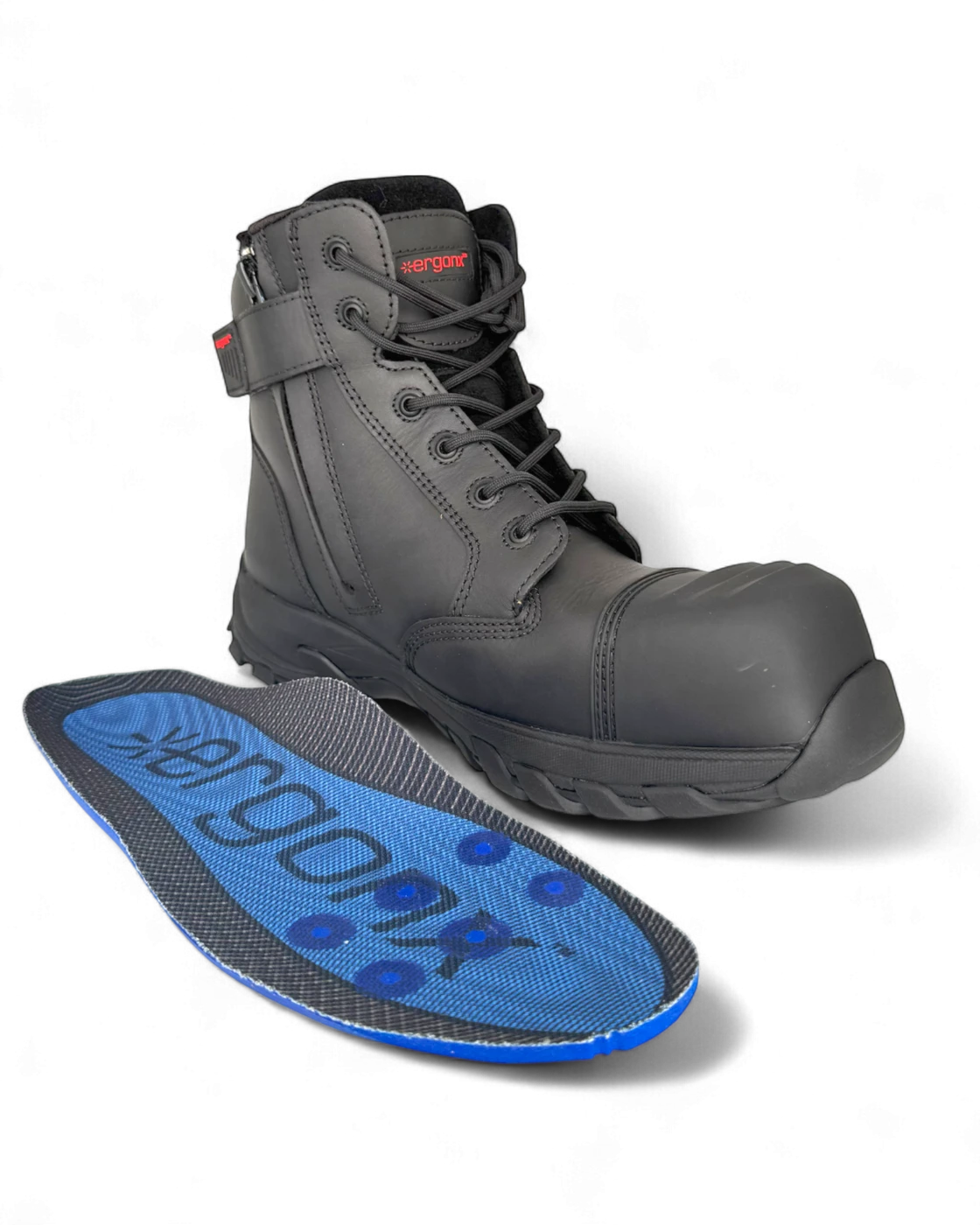
Choose your next step
The best work boot is the one that meets your protection requirements and fits your foot and working day. Use a shortlist built around the task rather than a universal ranking.
Begin with the safety specification your workplace requires. Compare only suitable models, then assess fit, movement and fastening.
Choose in four steps: check workplace requirements, decide on a boot or shoe profile, compare fastening, then check size and width.
Both toe materials can be used in certified safety footwear. Compare the exact product's certification, fit and construction instead of assuming one material wins in every workplace.
A boot and a safety shoe differ in profile and coverage. Choose between them only after checking whether your workplace specifies boot height or other protection.
Laces offer adjustment through the instep; elastic-sided boots offer pull-on convenience. Choose the fastening that gives your foot a secure fit.
A work boot should hold the heel securely and give the toes suitable room without pressure from the cap or upper. Check both width and length.
2E and 4E describe width options where offered. Compare the exact model's guidance and do not assume the same labelled width feels identical across every product.
Start with the women's model's own size chart. Check forefoot shape, instep room and heel hold rather than converting from a men's size by guesswork.
New footwear may feel different, but pain, numbness or a cramped safety cap are reasons to reassess fit. Break-in should not be used to justify the wrong size.
Use the exact model's certification and your employer's PPE requirements to assess safety footwear. A standard number alone does not list every protection feature.
Assess how a boot moves with your foot while preserving the structure intended by its design. Flex at the forefoot and support through the midfoot serve different purposes.
A shank is a structural component through the middle of a boot. Its role is different from the cushioning of an insole or the impact protection of a safety toe.
The heel counter helps shape the rear of footwear. Its feel matters alongside the fastening and footbed when assessing heel hold.
Comfort comes from the interaction of fit, support, cushioning and movement. No single feature can compensate for an unsuitable size or shape.
There is no single replacement interval that suits every worker. Exposure, frequency of use, care and visible damage all affect service life.
Replace footwear when damage, wear or changed fit means it no longer meets its intended role. A safety boot should not be kept solely because the upper still looks presentable.
Follow the care instructions for the exact material and model. Regular cleaning and inspection help you spot wear without making unverified protection claims.
Fit, wear and workload can contribute to discomfort, but symptoms can have other causes. Review your footwear and get persistent or concerning pain assessed.
Often the question is whether a particular orthotic and boot fit together. Check footbed removal, internal depth and the clinician's instructions.
Long periods on hard floors can make workday discomfort more noticeable. Review footwear fit, working patterns and any persistent symptoms with suitable professional advice.
Explore existing Ergonx articles on this topic, then follow the relevant footwear or fitting pathway when you are ready to compare options.
Explore existing Ergonx articles on this topic, then follow the relevant footwear or fitting pathway when you are ready to compare options.
Explore existing Ergonx articles on this topic, then follow the relevant footwear or fitting pathway when you are ready to compare options.
Explore existing Ergonx articles on this topic, then follow the relevant footwear or fitting pathway when you are ready to compare options.
Explore existing Ergonx articles on this topic, then follow the relevant footwear or fitting pathway when you are ready to compare options.
Explore existing Ergonx articles on this topic, then follow the relevant footwear or fitting pathway when you are ready to compare options.
Explore existing Ergonx articles on this topic, then follow the relevant footwear or fitting pathway when you are ready to compare options.
Explore existing Ergonx articles on this topic, then follow the relevant footwear or fitting pathway when you are ready to compare options.
Make an informed choice
Use the guides below to compare a specific question. Start with the protection your work requires and the way the footwear fits you.
Use these Ergonx guides to compare the footwear features relevant to your working day. Follow the exact product for its current sizes, widths, safety details and customer reviews.
Compare work boots